

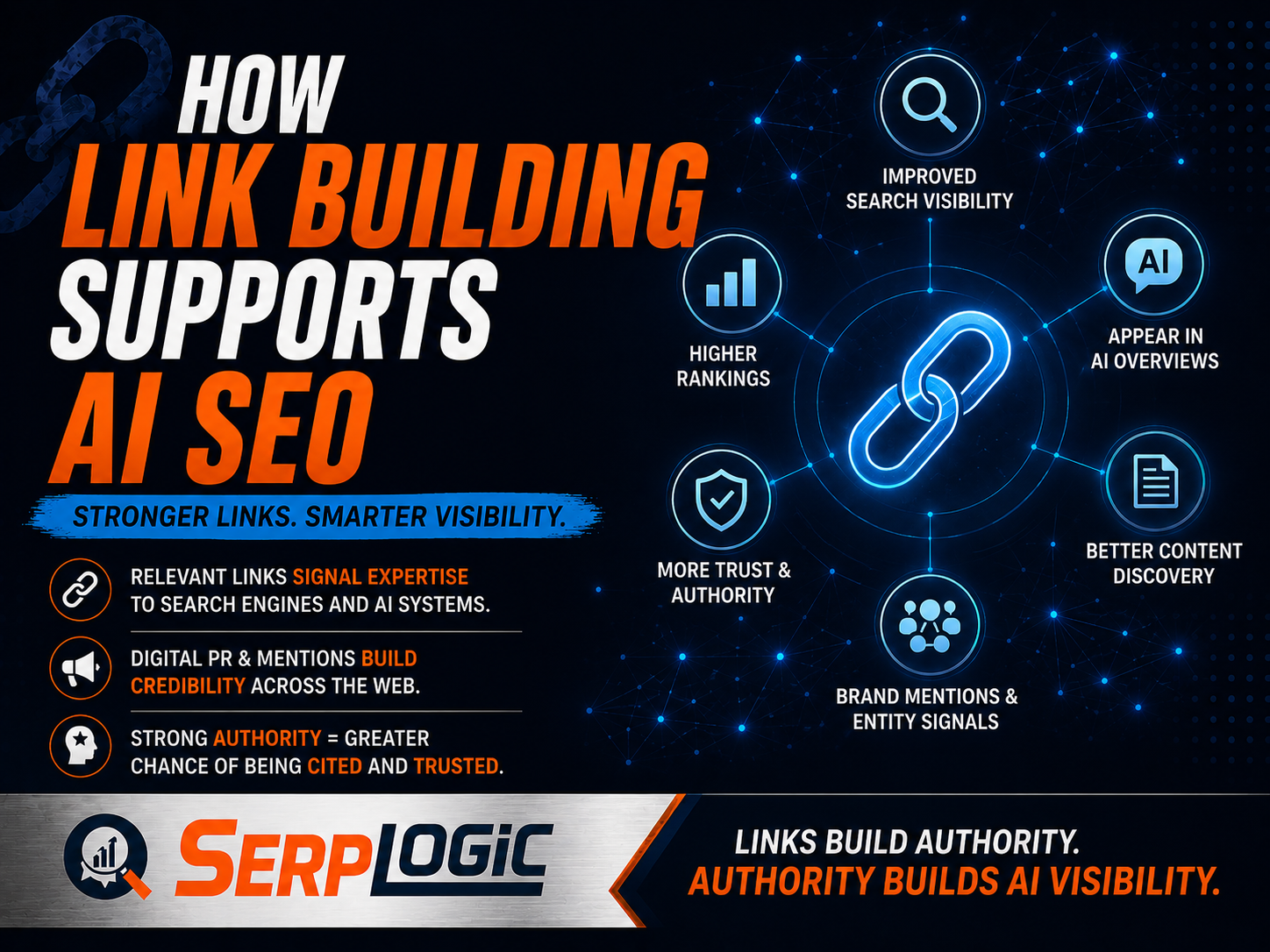
AI SEO has attracted the usual circus.
The “SEO is dead” crowd.
The “backlinks do not matter anymore” crowd.
The “just publish 500 AI articles and dominate ChatGPT” crowd.
The “I found a prompt that ranks in Perplexity” crowd.
Lovely stuff.
But here’s the thing.
AI search has changed how visibility is surfaced. It has not removed the need for authority.
If anything, authority matters more now because AI-driven search systems need to decide which pages, brands, sources and entities are worth trusting.
That is where link building still matters.
Not rubbish link building. Not exact-match anchors rammed into irrelevant articles on websites nobody reads. Not cheap guest posts that look like they were assembled during a power cut.
Proper link building.
Relevant links. AI Brand mentions. Digital PR. Topical authority. Third-party validation. The kind of authority footprint that makes a brand easier for Google, ChatGPT, Perplexity, Gemini and other AI search systems to understand, trust and potentially cite.
AI SEO is not about replacing link building.
It is about making link building smarter.
What Is AI SEO?
AI SEO is the process of improving visibility across AI-powered search environments.
That includes:
- Google AI Overviews
- Google AI Mode
- ChatGPT
- Perplexity
- Gemini
- Claude
- Bing Copilot
- other AI-driven search tools
Traditional SEO focuses heavily on ranking pages in search engines.
AI SEO also asks whether your brand can be mentioned, cited, summarised or recommended inside AI-generated answers.
That means the work includes:
- technical SEO
- content optimization
- entity SEO
- topical authority
- answer engine optimization
- generative engine optimization
- brand mentions
- digital PR
- link building
- third-party trust signals
So no, AI SEO is not some completely separate discipline.
It is SEO with a new layer on top.
The same fundamentals still matter. They are just being interpreted, combined and surfaced in new ways.
Why Links Still Matter in AI Search
Links are one of the ways the web signals trust, relevance and authority.
That has not stopped mattering because a chatbot can summarise a webpage.
AI systems need source material. They need trusted information. They need to understand which sites, brands and authors are credible enough to use.
Backlinks can support that by helping:
- pages rank in Google
- search engines discover content
- domains build authority
- brands earn topical relevance
- content gain credibility
- AI systems identify trusted sources
- third-party validation build around an entity
The mistake is thinking links only matter as a direct ranking input.
That is too narrow.
In the AI search world, a good link can do several jobs at once.
It can help rankings.
It can create a brand mention.
It can connect your company to a topic.
It can place you near relevant entities.
It can support digital PR visibility.
It can help users and search systems understand why you matter.
That is a lot more useful than obsessing over anchor text like it is still 2012.
Google Rankings Still Matter Because AI Systems Use the Web
Some people desperately want AI search to mean Google rankings no longer matter.
Guess what?
They still do.
Google AI Overviews and other AI search experiences are connected to the wider web. If your pages are already ranking, trusted, well-structured and topically relevant, you are usually in a better position than a site nobody can find.
That does not mean ranking number one guarantees AI Overview visibility.
It does not.
But strong organic visibility can support AI visibility because it shows your content is already relevant and useful enough to compete.
If your site has no authority, no rankings, weak content and no external validation, expecting AI systems to cite you is optimistic.
Very optimistic.
Link Building Strengthens Entity SEO
Entity SEO is a big part of AI search visibility.
Search engines and AI systems need to understand who you are, what you do and what topics you should be associated with.
A link from a relevant article can help reinforce that connection.
For example, if SerpLogic is mentioned and linked from articles about:
- link building
- digital PR
- AI SEO
- brand mentions
- authority links
- guest posts
- search visibility
- generative engine optimization
That helps build a stronger association between the brand and those topics.
Not because one link magically changes everything.
Because repeated relevant signals compound.
A strong entity footprint should make it obvious:
- who the brand is
- what it does
- who it serves
- which topics it is known for
- why it is credible
- where else it is referenced online
Links and mentions help create that footprint.
If your brand looks invisible across the web, AI systems are probably going to treat it that way.
Link Building and Brand Mentions Work Together
Backlinks are not the only thing that matters.
Brand mentions matter too.
This is where a lot of people get stuck in old thinking. They look at a placement and ask only one question:
“Did we get a link?”
That matters, obviously.
But for AI SEO, you should also ask:
- Was the brand mentioned clearly?
- Was it mentioned in a relevant context?
- Was it connected to the right topic?
- Was it placed near competitors or related entities?
- Did the page support commercial positioning?
- Does the mention help define what the brand does?
- Is the page likely to be indexed and trusted?
The best placements do more than pass authority.
They help shape the way the web describes your business.
For example, this is weak:
“Company X is a marketing provider.”
This is stronger:
“Company X helps SaaS brands build search authority through digital PR, link building and AI search visibility campaigns.”
The second version gives search engines, AI systems and readers much more context.
That context matters.
Digital PR Is Link Building for the AI Search Era
Digital PR has always been valuable for SEO when done properly.
Now it is even more useful because it helps create the wider authority layer that AI search depends on.
A good digital PR campaign can earn:
- relevant backlinks
- brand mentions
- expert quotes
- media coverage
- industry references
- founder mentions
- data citations
- list placements
- topical authority signals
- third-party validation
That is exactly the kind of footprint AI search can use to understand a brand.
Let’s say a SaaS company wants to be visible for “best customer onboarding tools”.
A weak strategy is publishing one blog post and hoping.
A stronger strategy includes:
- a clear category page
- comparison content
- use-case pages
- customer proof
- guest posts on SaaS sites
- inclusion in software roundups
- digital PR using original onboarding data
- expert quotes in relevant publications
- backlinks from niche resources
That is not just link building.
That is authority building.
And authority building is what AI SEO needs.
Topical Relevance Beats Random Metrics
A lot of bad link building is still obsessed with metrics.
DR. DA. Traffic estimates. Spam scores. Whatever number looks good in a spreadsheet.
Those things can be useful, but they are not the whole story.
For AI SEO, topical relevance matters a lot.
A link from a relevant niche article can often be more useful than a random link from a massive site with no topical connection.
If you are trying to build authority around AI search optimization, a mention in an SEO publication, marketing guide, AI search article or digital PR resource makes sense.
A link from an unrelated recipe blog does not suddenly make you an AI SEO authority.
Context matters.
Relevance matters.
The page around the link matters.
The words used to describe your brand matter.
The neighbouring entities matter.
This is where proper link building separates itself from link buying with better packaging.
Links Help Build Topical Authority
Topical authority is not just built with content.
It is reinforced by links.
If you publish a full AI SEO cluster but no one relevant links to it, you are relying entirely on your own website to prove your expertise.
That is weaker than having external sites validate the topic.
For example, an AI SEO cluster might include:
- AI Search Optimization: The Complete Guide
- What Is Generative Engine Optimization – Explained
- AEO vs GEO vs SEO
- How to Rank in AI Overviews
Internal links connect the cluster.
External links strengthen it.
Brand mentions reinforce it.
Digital PR spreads it.
That combination gives search engines and AI systems a much clearer reason to associate your site with the topic.
What Kind of Links Support AI SEO?
Not all links are equal.
Useful links for AI SEO usually have some of these qualities:
- relevant website
- relevant page topic
- natural brand mention
- clear surrounding context
- indexable page
- useful content
- real audience
- sensible anchor text
- connection to your target topic
- association with trusted entities
Poor links usually look like:
- unrelated site
- thin article
- forced anchor text
- no real context
- obvious paid footprint
- spammy outbound links
- no topical relevance
- no user value
You do not need every placement to be perfect.
But if your entire link profile looks like it was built from whatever was cheapest that week, do not expect it to support a serious AI SEO strategy.
AI search is not making weak authority stronger.
It is making weak authority easier to spot.
Link Building Examples for AI SEO
SaaS Company
A SaaS company wants to appear in AI answers for “best proposal software for agencies”.
Useful link building might include:
- guest posts on agency growth sites
- software comparison list placements
- links from sales enablement blogs
- digital PR around proposal data
- integrations pages
- customer success case studies
- mentions in founder interviews
- reviews on relevant third-party platforms
The aim is to connect the brand with the category from multiple angles.
One article says the product exists.
A proper authority footprint shows the market recognises it.
Ecommerce Brand
An ecommerce brand wants AI tools to recommend its products.
Useful placements might include:
- product roundups
- niche buying guides
- expert review articles
- PR around product launches
- links from hobbyist blogs
- gift guides
- comparison pages
- authority content around use cases
The goal is not just rankings.
It is to make the brand look like a credible option in that product space.
If nobody outside the ecommerce site mentions the brand, the trust picture is weaker.
Affiliate Site
An affiliate site wants to survive as AI Overviews answer more basic queries.
It needs more than generic “best X” posts.
Useful authority signals might include:
- links to testing methodology
- mentions from niche experts
- citations of original data
- guest posts on relevant sites
- links to comparison frameworks
- editorial credibility signals
Affiliate sites without authority are going to have a rough time.
Faceless review pages are not exactly future-proof.
Local or Niche Service Business
A local service business wants to appear in AI-generated recommendations.
Useful link building might include:
- local press
- niche directories
- industry associations
- supplier pages
- case studies
- partner mentions
- local sponsorships
- expert commentary
For local businesses, these placements help confirm legitimacy.
They show the business exists outside its own website.
That still matters.
Common Link Building Mistakes in AI SEO
Thinking Links Are Dead
Links have been declared dead more times than most SEO blogs have been updated.
Yet competitive markets are still full of sites winning with authority.
Links are not the only factor.
But pretending they do not matter is nonsense.
Chasing Metrics Instead of Context
A high DR link from a random site is not automatically better than a relevant placement from a smaller niche site.
Look at the topic. The page. The audience. The surrounding content. The brand mention. The intent.
Metrics help.
Judgement wins.
Building Links Only to Money Pages
Money page links matter, but supporting content matters too.
If you want to build AI SEO authority, link to pillar pages, data assets, guides, comparison content and supporting resources.
That helps build the topic, not just one sales page.
A money page with no supporting authority around it often looks thin.
A money page sitting inside a proper topical cluster with relevant external signals is much stronger.
Ignoring Brand Mentions
Some links are technically there but do nothing to explain the brand.
That is a missed opportunity.
The mention should help clarify what the company does and why it matters.
A vague link is better than nothing.
A relevant link with clear brand context is much better.
Using Cheap, Irrelevant Guest Posts
Guest posts can work.
Bad guest posts are just content-shaped litter.
If the site is irrelevant, the article is thin and the link is forced, you are not building authority.
You are building a future cleanup project.
How SerpLogic Helps With AI SEO Link Building
SerpLogic helps brands build the authority layer that supports both traditional SEO and AI search visibility.
That includes:
- link building
- blogger outreach
- guest posts
- authority links
- digital PR
- brand mentions
- topical relevance
- AI search visibility support
We are not pretending link building alone solves AI SEO.
It does not.
But strong links and relevant mentions are part of the wider trust picture.
The brands that win in AI-driven search will usually be the brands that are easier to understand, easier to verify and harder to ignore across the web.
That means content on your own site.
And authority outside it.
Final Word: AI SEO Still Needs Authority
AI search has changed the surface area.
It has not removed the need for trust.
If you want to improve AI SEO visibility, you need more than content. You need the authority signals that help search engines and AI systems believe your content deserves attention.
That means relevant links.
Clear brand mentions.
Digital PR.
Topical authority.
Entity clarity.
Third-party validation.
The future of SEO is not just publishing AI content and hoping the robots are impressed.
It is being cited, trusted and understood.
And links still help with that.
A lot.
FAQs
Does link building help AI SEO?
Yes. Link building can support AI SEO by improving authority, rankings, discovery, topical relevance and third-party validation. It also helps strengthen the wider trust signals around your brand.
Are backlinks still important for AI search?
Yes. Backlinks are still important because they help search engines understand authority and relevance. AI search has not made links irrelevant. It has made quality and context even more important.
Do brand mentions matter for AI SEO?
Yes. Brand mentions help reinforce entity signals and topical associations. They can support AI search visibility by helping systems understand what your brand is known for.
What is the difference between backlinks and brand mentions?
A backlink is a clickable link from another website to yours. A brand mention is a reference to your company, product or service. Some mentions include links, and some do not. Both can support visibility when they appear in relevant contexts.
What kind of links are best for AI SEO?
The best links for AI SEO usually come from relevant, trusted and indexable pages. They should appear in useful content and connect your brand to the topics you want to be known for.
Is digital PR useful for AI SEO?
Yes. Digital PR can earn links, mentions, expert coverage and third-party validation. These signals can help build the authority footprint that supports AI search visibility.
Should I build links to blog posts or service pages?
Both can matter. For AI SEO, it is often smart to build links to pillar pages, guides, research assets and commercial pages. Supporting content can help build topical authority, while commercial pages help convert demand.
Can bad links hurt AI SEO?
Bad links can create a messy authority footprint and may damage trust if they are spammy or irrelevant. Quality control matters. Cheap, irrelevant links are not a serious AI SEO strategy.
How many links do I need for AI SEO?
There is no fixed number. It depends on your niche, competition, current authority, content quality and goals. Focus on relevance, consistency and authority rather than chasing a random link count.
What is the best first step?
Start with an authority audit. Look at your current backlink profile, brand mentions, topical relevance and competitor links. Then build a plan around relevant placements, digital PR, guest posts and content that deserves to earn authority.
