

*updated 2026
PBNs (private blog network strategies) are one of the most misunderstood parts of SEO. Some people think you can throw a few PBN links at a site and hit page one in days. That might have worked years ago. It doesn’t now.
The reality is this: most blog networks being sold today aren’t private, aren’t safe, and aren’t built to last. They’re sitting on shared sites with hundreds of outbound links, and when one gets picked up, everything connected to it is exposed.
This guide to building a private blog network breaks down what actually works in modern SEO, how to avoid getting penalize issues, and how to build a PBN that improves ranking instead of destroying it.
What Is a PBN (Private Blog Network) and How Do Blog Networks Work?
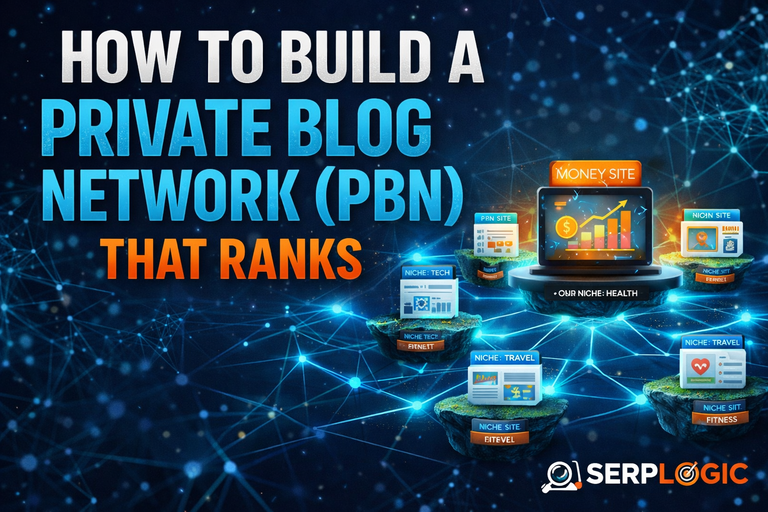
A PBN, or private blog network, is a group of sites built to pass backlinks and link equity to a money site. The goal is to influence ranking in search engine results by controlling links to your site.
Most pbns use an expired domain that already has authority and backlinks. That domain is rebuilt into a pbn site and used to create links pointing at a target website.
In theory, it’s simple. In reality, it’s where most people go wrong.
Search engines like Google don’t just look at links anymore. They look at patterns, ownership signals, and whether your sites look like real sites. If your pbn network looks engineered, it won’t hold.
Do PBNs Still Work for SEO and Ranking in 2026?
Yes — but only when done properly.
Backlinks are still one of the strongest ranking factors in any search engine. A controlled pbn network gives you the ability to build links exactly how you want, using specific anchor text and keyword targeting.
But here’s where most people fail and have to buy backlinks rather than own the backlinks.
Using a pbn in a low-quality way creates obvious risk. Cheap pbns with thin content, identical builds, and zero traffic are easy to detect. That’s when google penalties come into play.
A good pbn works because it doesn’t look like a pbn.
Why Most PBN Networks Fail (And Get Penalized Fast)
Most pbn networks fail for one simple reason — they’re not private and they’re not built properly.
The majority of networks being sold today are nothing more than recycled blog networks with hundreds of outbound links. These sites exist to sell links, not to function as real websites.
That creates an obvious footprint.
Common mistakes:
- Sites from a single pbn linking to hundreds of unrelated niches
- Identical content structures across your pbn
- Repeating anchor text patterns
- No real traffic or engagement
- Low-quality content that exists only for backlinks
When one site gets flagged, everything connected to that network is at risk.
Many pbn setups don’t fail immediately — they slowly lose ranking until the entire backlink profile becomes weak.
What Google Actually Detects in Modern PBN Building
Search engines like Google have evolved far beyond basic link detection.
They now analyse:
- Linking patterns across multiple sites
- Whether links to your site come from real sites or obvious networks
- Anchor text distribution
- Site behaviour (traffic, updates, engagement)
- Content quality across domains
If your pbn sites look like part of a pbn, they will eventually be identified.
This is why pbn building today is less about hiding and more about making your sites indistinguishable from real sites.
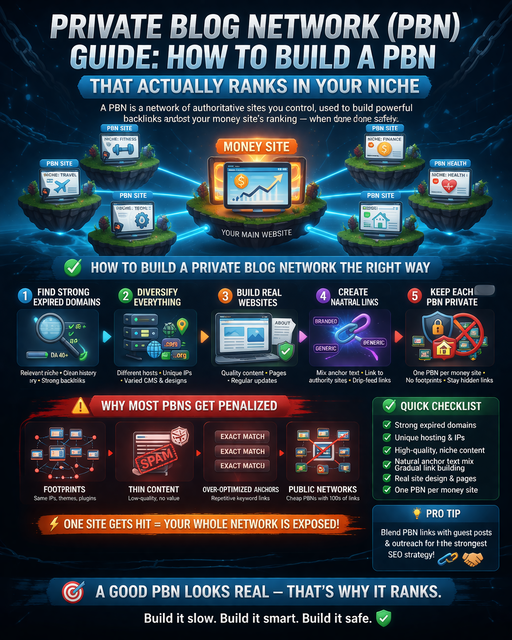
How to Build a Private Blog Network the Right Way
If you want to build a private blog network that actually works, you need to approach it differently.
Building a network involves creating independent sites that stand on their own. Each domain should look like a legitimate site, not part of a pbn network.
A successful pbn requires:
- Strong domains for your pbn
- High-quality content
- Natural linking behaviour
- Variation across your pbn
You’re not just building links — you’re building assets.
Most people rush pbn building. That’s why they fail.
How to Choose the Right Expired Domain for Your PBN
Everything starts with the domain.
An expired domain gives your pbn immediate authority, but only if it’s clean.
What to check:
- Backlink profile (avoid spammy history)
- Domain authority and trust signals
- Relevance to your niche
- Previous use of the domain
Tools like Ahrefs help evaluate whether a domain has strong backlinks or toxic signals.
Choosing the right domains for your pbn is one of the biggest factors in long-term ranking success.
Hosting, IP Address, and Footprint Management
Hosting still matters — but not in the way most people think.
Yes, spreading sites across different hosting providers and IP address ranges helps reduce footprint risk. But that alone won’t protect you.
Google looks deeper.
You also need variation in:
- Site design
- CMS setup
- Plugins
- Content style
Avoid using cheap SEO hosting packages. These often create the exact footprint they claim to prevent.
A good pbn avoids patterns entirely.
How to Structure Content on Your PBN Sites
Content is where most pbns fail.
If your content is low-quality, your entire network becomes weak. Search engines can easily identify content that exists only for link building.
Content on your pbn sites should:
- Be relevant to your niche
- Link out to authoritative sources
- Provide value like real blogs
- Use natural language and varied structure
Your pbn sites look stronger when they behave like real websites.
This is where many pbn networks fall apart — they focus on links instead of quality.
Anchor Text, Backlinks, and Link Building Strategy
Anchor text is one of the easiest ways to expose a pbn.
Overusing exact match keyword anchors creates a clear signal. This can trigger ranking drops or worse.
Instead:
- Mix branded, generic, and partial anchors
- Spread backlinks across multiple pages
- Avoid patterns
Your pbn should support a wider link building plan that includes outreach and guest posting.
Relying only on pbns is risky. Combining methods builds a stronger backlink profile.
Should You Build One PBN or Multiple Networks?
You should avoid using one pbn to power multiple sites.
Instead, create a network per money site. This reduces risk and isolates potential issues.
Building a network takes time to build properly. Even 10 pbn sites built well will outperform many pbn setups built quickly.
Quality always beats scale.
How to Make Your PBN Sites Look Like Real Sites
This is the most important rule.
Make your pbn sites look like real sites.
That means:
- Adding About, Contact, and Privacy pages
- Publishing consistent content
- Linking to authoritative sites
- Avoiding obvious monetisation
If your pbn website looks fake, it will fail.
If it looks real, it becomes extremely difficult to detect.
PBN vs Outreach and Guest Posting: The Smart SEO Strategy
PBNs are just one part of a larger SEO strategy.
The best results come from combining:
- Outreach for authoritative backlinks
- Guest posting for niche relevance
- PBN links for control
This balance creates stability in your link profile and reduces risk.
Experienced SEO professionals don’t rely on one method — they build systems.
Final Thoughts: Are PBNs Worth It?
PBNs are not dead. Bad PBNs are.
A well-built pbn can improve ranking, pass link equity, and give you control over your SEO.
A poorly built one can destroy your search engine rankings.
The difference comes down to execution.
Key Takeaways
- A private blog network is a group of sites used to influence ranking through backlinks
- Most pbns fail because they leave clear footprints
- Choosing the right domain is critical for long-term success
- Content quality determines whether your pbn sites hold value
- Anchor text must be varied to avoid penalties
- Hosting diversity helps, but patterns matter more
- Combine pbns with outreach and guest posting for best results
- Build slowly — rushing leads to failure
- A good pbn looks like a collection of real sites
- Done properly, pbns can still improve search engine rankings
